Last Updated on November 25, 2026
Music is one of the oldest ways people have expressed their identity, beliefs, and traditions. Yet many instruments that once played an important role in European cultures have almost disappeared from everyday life. Today, a small community of musicians and craftspeople is working to bring their sounds back.
One of these projects is YARuGA, a workshop dedicated to reconstructing historical musical instruments using archaeological discoveries, traditional craftsmanship, and modern musical experience.
Table of Contents
Musical Heritage Beyond Museum Walls
Across Europe, archaeological excavations have uncovered instruments that reveal how people made music centuries ago. From ancient Celtic horns to medieval Slavic string instruments, these discoveries offer valuable insights into cultural traditions.
The challenge is that an archaeological artifact rarely tells the whole story. Researchers and instrument makers must study its construction, surviving materials, historical illustrations, and related musical traditions to understand how it might have sounded.
The ancient Celtic carnyx provides a remarkable example. This long ceremonial and military horn was used during the Iron Age. Archaeological discoveries at Tintignac in France have helped researchers better understand its distinctive construction, including its animal-shaped bell.
Another fascinating tradition comes from Scandinavia, where instruments such as the Kravik lyre and the bowed talharpa connect modern audiences with northern European musical heritage.
From Historical Research to Working Instruments
For the craftspeople behind YARuGA, preserving musical history means more than producing objects for display.
The workshop creates playable reconstructions inspired by archaeological finds and museum collections. Its instruments include:
- Talharpa and tagelharpa: bowed string instruments associated with northern European folk traditions.
- Kravik lyre: a plucked string instrument inspired by a historical Norwegian example.
- Tintignac carnyx: a reconstruction inspired by an extraordinary Celtic archaeological discovery.
- Gusli and gudok: instruments connected with medieval Slavic musical culture.
Each instrument requires careful attention to materials, construction, and acoustics. Historical references guide the process, while the final result must also meet the practical needs of musicians.
YARuGA: Keeping Traditional Craftsmanship Alive
YARuGA grew from a passion for historical music into a workshop where research and hands-on craftsmanship meet.
Its approach combines the study of archaeological evidence with individual instrument making. Rather than producing identical factory-made products, the workshop creates instruments by hand and offers custom finishes, ornamentation, and design details.
Through its collection of handcrafted historical musical instruments, YARuGA gives performers, collectors, and enthusiasts an opportunity to explore musical traditions that might otherwise remain silent.
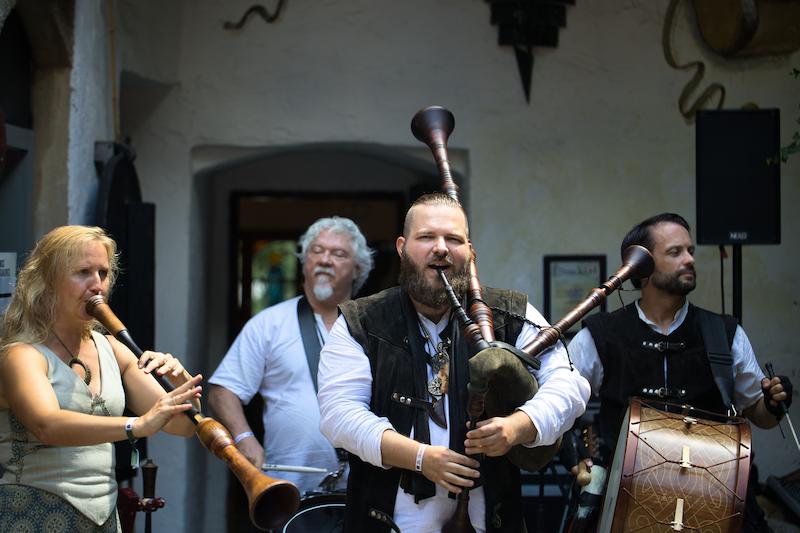
These instruments can be heard in contemporary performances and recordings, showing how historical sounds can become part of new artistic expression.
A Living Connection to the Past
Reconstructing an ancient instrument cannot answer every question about how music sounded hundreds or thousands of years ago. Much of that history remains open to interpretation.
Nevertheless, playing these instruments creates a meaningful connection between past and present. Their continued use encourages interest in archaeology, traditional craftsmanship, and the cultural diversity of European music.
Projects such as YARuGA demonstrate that musical heritage does not have to remain behind museum glass. It can still be heard, explored, and passed on to future generations.