
Last Updated on February 11, 2026
We all know the feeling of relaxation that comes with lighting a fire on a cold evening. It is one of the best parts of living in a place with real seasons. However, relaxation can turn into panic very quickly if your chimney is not behaving the way it should.
Most homeowners assume their chimney is fine as long as the smoke goes up and the fire burns. But often, the system gives us subtle warnings long before a disaster happens. Knowing how to read these “red flags” can save you from a house fire or a living room full of smoke. It helps you understand when you can wait for a scheduled appointment and when you need to pick up the phone right away.
The Smell of Trouble
One of the first signs that something is wrong usually hits your nose before your eyes. A healthy fireplace should not smell when it is not in use. If you walk into your living room and catch a strong whiff of a “wet campfire” or a musty, asphalt-like odor, pay attention.
This smell typically indicates two things. First, you likely have a significant buildup of creosote (soot) in the flue. Second, moisture is getting in and mixing with that soot to create the odor. This is not just an annoyance; it is a sign that your chimney is dirty and possibly damp. Damp creosote is corrosive and damages the inside of your chimney. If the smell is potent, it is time to schedule a chimney cleaning colorado springs service to remove the source of the odor and check for leaks.
Strange Sounds from the Flue
Chimneys should be silent. If you hear noises coming from your fireplace, it is rarely a good sign. A loud “whooshing” or roaring sound during a fire is the most dangerous noise of all. This indicates a chimney fire. The creosote inside the flue has ignited, and air is being sucked in rapidly to feed the flames. If you hear this, get everyone out of the house and call 911.
On the other hand, scratching, chirping, or rustling noises usually mean you have guests. Birds, squirrels, and raccoons love to nest in chimneys because they are warm and protected from predators. A nest can completely block the chimney. If you try to light a fire with a nest in the way, smoke will pour back into your house, and the nest could catch fire. An animal blockage is a common reason people need an emergency chimney sweep to clear the airway immediately.
Smoke Where It Shouldn’t Be
The job of a chimney is simple: draw smoke up and out. If smoke is entering your room, the system is failing. This is often called “back-puffing.”
It can happen for several reasons. The flue might be too cold, causing a heavy air plug that the smoke cannot push through. The house might be too airtight, creating negative pressure that sucks air down the chimney. Or, most commonly, there is a physical blockage in the flue. If your fireplace smokes every time you use it, or if it suddenly starts smoking after working fine for years, stop using it immediately. breathing that smoke is bad for your lungs and fills your home with carbon monoxide.
Debris in the Firebox
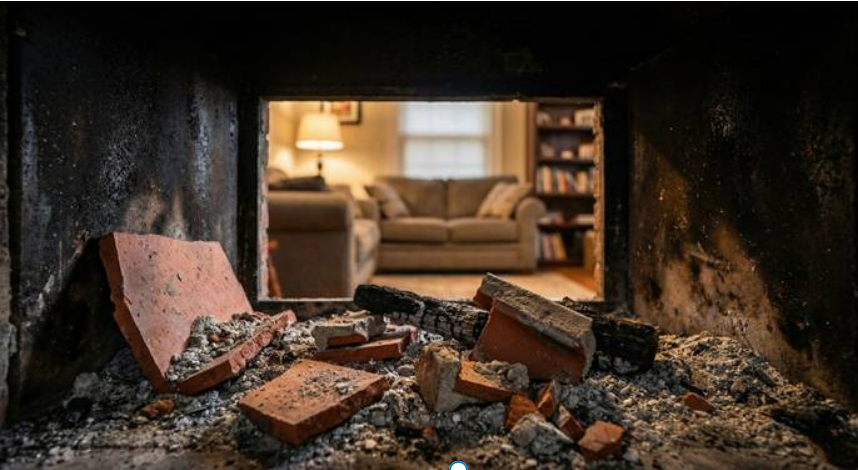
Take a look at the floor of your fireplace. You should only see ash and maybe some bits of charcoal. If you start seeing pieces of red clay tile, flakes of brick, or clumps of mortar, your chimney is falling apart from the inside.
This debris usually comes from the flue liner deteriorating. The liner protects the masonry and the house from the heat of the fire. If pieces of it are falling out, that protection is gone. Using a fireplace with a damaged liner is dangerous because heat can transfer through the gaps and ignite the wood framing of your attic or walls. This is a structural red flag that requires a professional inspection before you light another fire.
Conclusion
Your fireplace is a machine, and like any machine, it tells you when it is breaking down. Don’t ignore the smells, the sounds, or the smoke. These are your chimney’s way of asking for help. By staying alert to these warning signs and calling in a professional when you spot them, you ensure that your home stays safe, warm, and smoke-free all winter long.